
Step outside on a July afternoon and you can feel what your floors live with every day: heat, humidity, and big swings between air‑conditioned interiors and sticky outdoor air. If wood isn’t chosen and finished with that movement in mind, it can cup, gap, or lose its luster long before it should.
This guide walks through which hardwood species and finishes handle our climate best, and how to keep them looking good for the long run.
Why Humidity Matters So Much for Wood Floors
Wood is hygroscopic, which means it constantly takes in and releases moisture. In a hot, humid climate, that cycle is more extreme. Boards swell when the air is damp and shrink when your HVAC dries the house out. Over time, that movement shows up as:
- Cupping, crowning, gaps between boards, surface checking, and finish wear along plank edges
The more stable the construction and the harder the species, the better it will ride out those seasonal changes. Engineered hardwood with a stable core and a tough finish almost always outperforms solid boards in this type of environment. You can compare species, plank widths, and constructions in Faith and Grace Flooring’s hardwood flooring collection.
Best Hardwood Species for a Hot, Humid Climate
Domestic species tend to behave more predictably here because they’re grown in similar conditions.
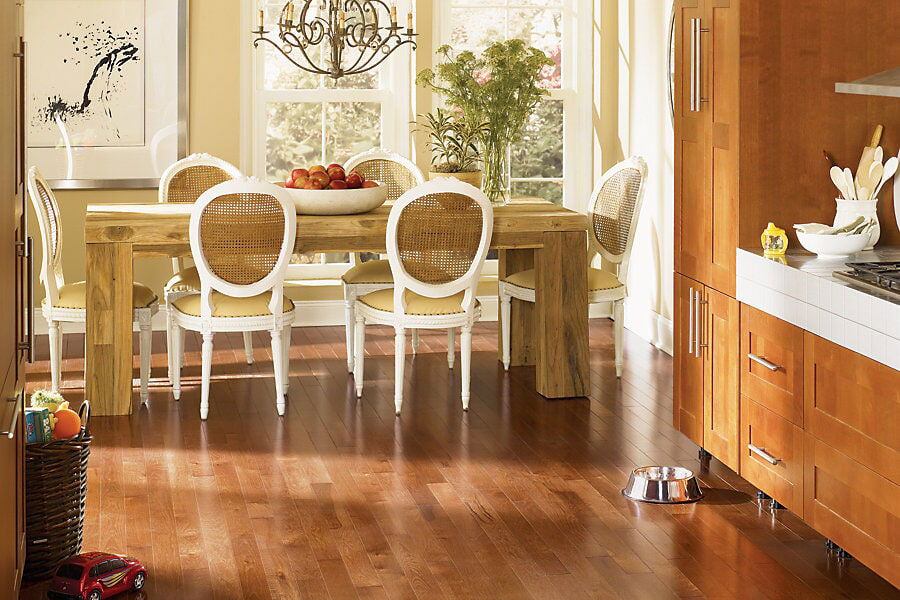
Oak is the workhorse. It has a strong grain that hides everyday dings and minor seasonal gaps, and it accepts stain beautifully from light natural looks to deep espresso. For busy households with kids and pets, oak offers an ideal balance of durability, stability, and classic style.
Hickory is harder and more rustic. Its dramatic color variation and dense structure make it excellent for high‑traffic spaces where you want a lived‑in, character‑rich floor that can take a beating. Because it moves a bit more than oak, hickory really shines in engineered constructions.
Maple brings a cleaner, more contemporary look with a subtle grain. It’s quite hard, but its smooth surface can show scratches and dents more easily, so it’s better in spaces where you’re not constantly dragging chairs or toys.
If you like the wood look but want even more protection against moisture, it can be helpful to compare these species to modern waterproof alternatives in the laminate flooring options that mimic oak, hickory, and maple without the same sensitivity to humidity.
Finishes and Sheens That Stand Up to Humidity
Once you’ve chosen a species, the finish is what takes the daily abuse from shoes, pet nails, and shifting moisture. In a humid climate, you want a finish that is both flexible and forgiving.
Modern polyurethane and aluminum‑oxide finishes form a tough, protective layer over the wood. They resist surface moisture and everyday spills better than older wax systems and require far less routine upkeep. A quality site‑applied or factory finish, paired with stable construction, does most of the heavy lifting in protecting your investment.
Sheen level matters too. High‑gloss surfaces highlight every tiny wave or seasonal movement. Satin or matte sheens soften those reflections so minor cupping or small gaps are less noticeable, and they hide dust and footprints better as well.
If you already have solid hardwood that’s structurally sound but looks tired, you don’t necessarily need to replace it. Professional sanding and a new, climate‑appropriate topcoat through a service like Faith and Grace Flooring’s hardwood refinishing can update the color, upgrade the finish technology, and boost your home’s value without starting from scratch.
When to Consider Waterproof and Hybrid Solutions
Some spaces are simply tough on real wood: basements, bathrooms, laundry rooms, and mudrooms where wet shoes and pet bowls live. In those areas, it can be smarter to use a waterproof material that still delivers a wood‑look surface.
Today’s waterproof laminates and rigid core products are designed to handle standing moisture and big temperature swings without swelling or warping. Many are textured and beveled to look remarkably close to real hardwood, which makes it easy to blend them with wood in adjacent rooms. You can zero in on these options using the waterproof flooring filter when you’re comparing materials.
For garages or utility spaces where wood is not practical at all, a specialty coating such as epoxy flooring can create a durable, easy‑to‑clean surface that handles hot tires, moisture, and everyday wear.
Ready to Choose the Right Floor for Your Home?
Selecting the right species and finish for this climate is part science, part style. The good news is you don’t have to figure it out alone. If you’d like help narrowing down options and planning your project, you can request a visit or showroom consultation through Faith and Grace Flooring’s free estimate request.