

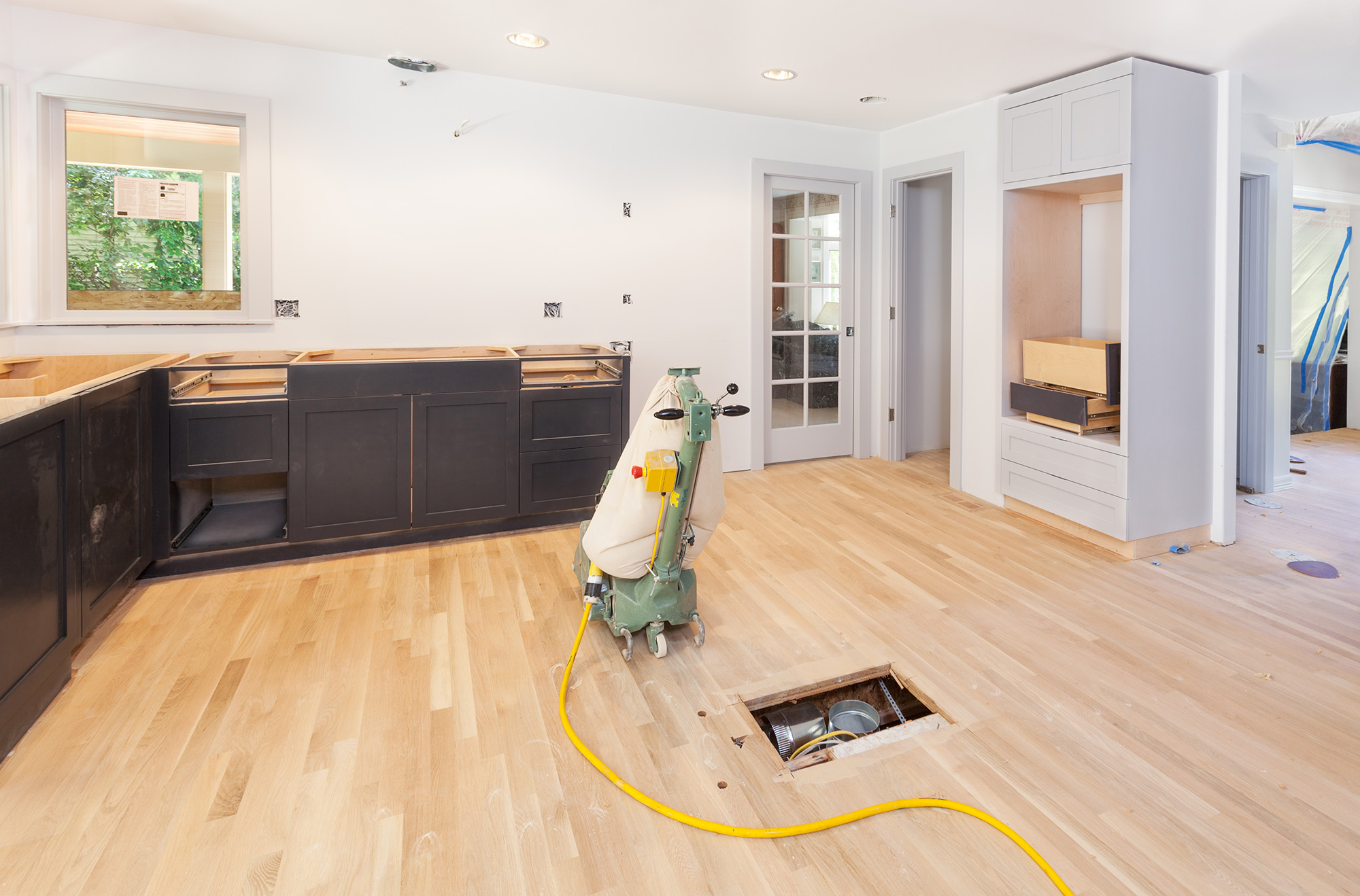
You walk across your living room and catch the light hitting the floor at just the wrong angle — every scratch, every dull patch, every worn-through spot suddenly impossible to ignore. Those hardwood floors have served your home well for years, maybe decades. But lately they've been looking less "charming patina" and more "needs serious help." You've heard about dustless refinishing, and the name alone sounds appealing. Before you commit, it's worth understanding what the process actually involves and whether your particular floor is the right candidate.
What Dustless Refinishing Actually Means
Traditional hardwood sanding creates an enormous amount of fine wood dust that gets into everything — ductwork, cabinets, closets, and the air you breathe for weeks afterward. Dustless systems tackle this problem at the source. Instead of letting particles fly freely, the sanding equipment connects to a high-powered vacuum system with HEPA filtration that captures debris the moment it's generated.
To be clear: no system is 100% dust-free. The term "dustless" describes a dramatic reduction — roughly 99% less airborne particulate than conventional methods. You will still see a very fine film on nearby surfaces when the job is complete, but you will not be living in a cloud of wood dust for days on end. For families with allergies, asthma, or infants crawling on the floor, that distinction matters enormously.
When Refinishing Beats Replacement
The first question to ask is whether your floor can be refinished at all. Solid hardwood — the classic tongue-and-groove planks nailed directly to the subfloor — can typically handle three to five full sanding cycles over its lifetime. If yours is solid wood and hasn't been sanded down to the tongue, refinishing is almost certainly the more practical path. You keep the character of the original material, avoid the cost and disruption of tear-out, and gain another decade or more of beautiful wear.
Engineered hardwood is trickier. These planks have a thin veneer of real wood bonded to a plywood or composite core. Some engineered floors can handle one light sanding; most cannot be refinished at all. If you're unsure what you have, inspecting a floor vent or a closet edge often reveals the cross-section.
For floors that are structurally compromised — loose boards, deep water damage, widespread rot — replacement makes more sense. In those cases, our hardwood catalog offers hundreds of options spanning everything from classic oak to wide-plank hickory in today's most popular finishes. But if the bones are good and only the surface is the problem, refinishing delivers a transformation at a fraction of the cost.
What the Process Looks Like
A proper dustless refinishing job begins with preparation. Furniture moves out of the room, and baseboards may need protection or removal. The sanding itself progresses through multiple grits — coarse to strip the old finish and level the surface, medium to erase those initial scratches, fine to create a silky-smooth substrate ready for stain and finish.
After sanding comes the creative part: choosing your stain. Going darker hides wear patterns and gives a dramatic, modern feel. Going lighter — often by sanding to raw wood and applying a clear or lightly tinted finish — creates the airy, Scandinavian-influenced look popular in newer Middle Tennessee homes. The final topcoat, typically a water-based or oil-based polyurethane, seals everything in and cures over several days. You'll want to stay off the surface for at least 24 hours and keep area rugs and furniture off it for several days longer.
Why Professional Installation Changes Everything
Dustless equipment is only as good as the crew running it. Proper grit progression, even pressure across the drum, careful edge work with the orbital sander — these are skills built over years, not learned from a rental-counter tutorial. A rushed or uneven sanding job leaves visible drum marks, gouges, and wavy surfaces that the stain will only accentuate. Certified installers who stand behind their work with a warranty give you confidence that the floor you see at the end is the floor you'll live with for years.
That level of craft is exactly what our hardwood refinishing service is built around — certified teams using dustless equipment, a full range of stain and finish options, and a one-year warranty on every project. In a fast-growing area like Rutherford County, where mid-century homes with original oak sit alongside brand-new builds with builder-grade finishes, having a partner who knows the difference matters.
Is It Right for Your Home?
If your solid hardwood is scratched, faded, or simply tired but still structurally sound, dustless refinishing is one of the highest-return improvements you can make. You avoid the mess of traditional sanding, preserve the floor you already love, and add years of life for significantly less than replacement would cost. If the damage runs deeper or the floor has already been sanded too many times, new hardwood may be the better path — and either way, professional guidance makes the decision clear.
Ready to see what your floors could look like? Schedule a free estimate and we'll assess your floors in person, answer every question, and map out exactly what the process would involve for your home.