

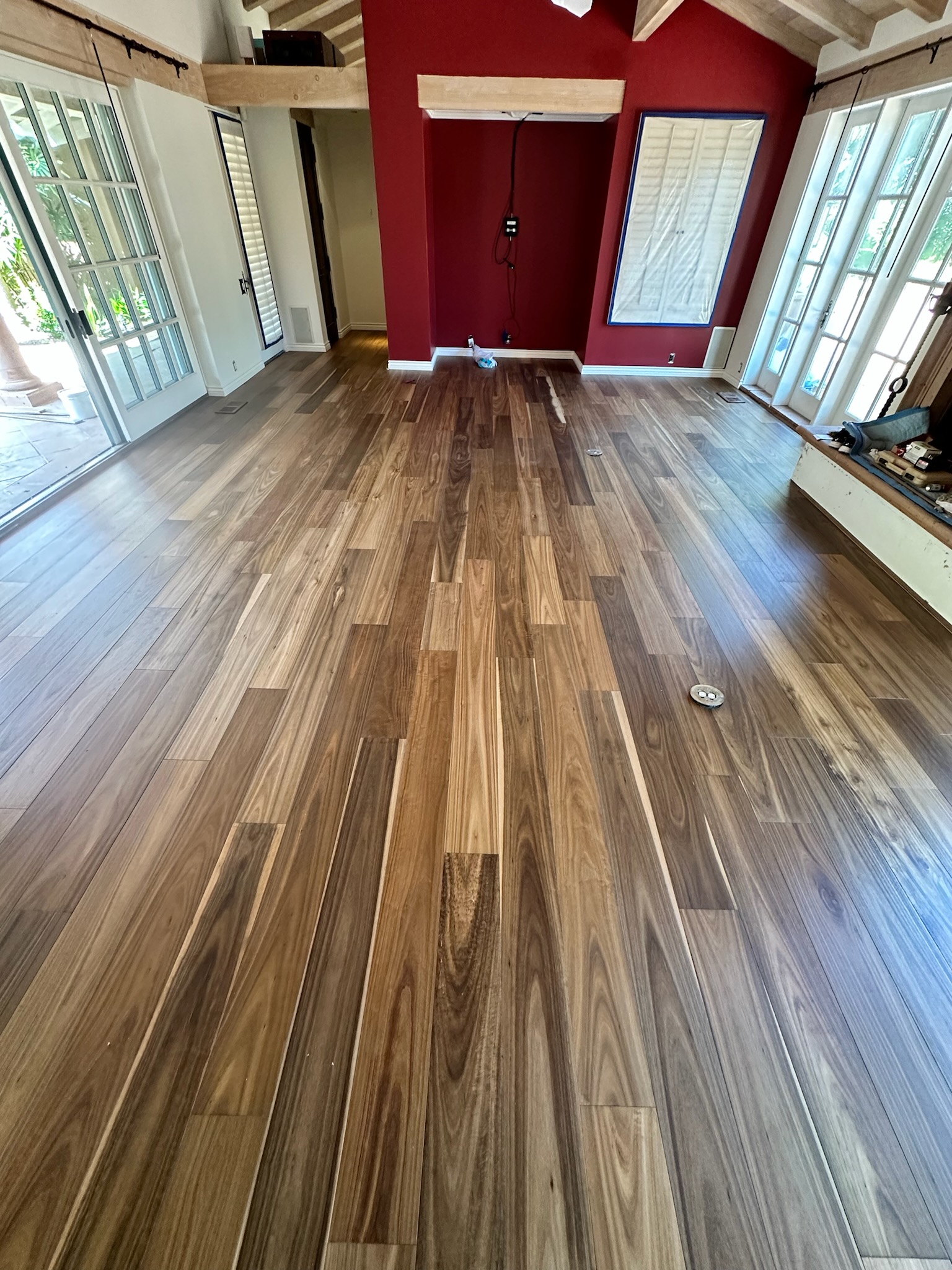
You close on a beautiful new build, take that first walk-through without the builder’s staging, and something feels off. The layout works, the paint is fresh, the kitchen shines—but the floors look flat and “builder basic.” In many of today’s subdivisions, the standard package puts money into cabinets and countertops while flooring becomes an afterthought. That’s why so many homeowners decide to upgrade to hardwood soon after move-in instead of living with surfaces that don’t match the rest of the home.
Why Builders Use “Good Enough” Floors
Production builders are juggling tight timelines, material shortages, and strict budgets. They often choose flooring that installs quickly, hides minor imperfections, and hits a price point. That usually means:
- Thin laminate or LVP in the main areas and basic carpet in bedrooms
These choices aren’t necessarily bad, but they’re chosen for the builder’s priorities, not yours. Once the dust settles and the punch list is done, owners start noticing hollow sounds underfoot, repeating patterns, or floors that clash with their furniture. Upgrading to a better-quality wood surface—whether solid, engineered, or high-end laminate—lets you tailor the look and performance to your real life instead of the builder’s spreadsheet.
Choosing the Right Hardwood for New Construction
When you’re upgrading right after closing, you have an advantage: the subfloors are new, the layout is modern, and you can think long-term. True hardwood brings warmth, resale value, and the option to refinish down the road. Engineered products handle seasonal humidity swings well, which matters in Middle Tennessee’s hot, damp summers and heat-on, dry-air winters.
To compare species, plank widths, and stain options side by side, many homeowners start with an online browse through a curated hardwood flooring collection. That kind of catalog lets you narrow in on looks that match your trim color, doors, and staircase before you ever step into a showroom. The key is to think beyond “dark vs. light” and consider grain, sheen, and how much variation you want from board to board.
When Laminate or Luxury Vinyl Makes More Sense
In busy households with kids, pets, or frequent entertaining, you might love the idea of hardwood but worry about scratches, moisture, or maintenance. That’s where today’s wood-look alternatives come in. Quality laminate has come a long way from the plastic-looking floors of the past, with realistic textures and tough wear layers that shrug off everyday abuse.
If you want a wood appearance in high-moisture areas like basements or bathrooms, luxury vinyl can be a smart companion to real wood in the main living spaces. It handles spills and wet shoes without the same concerns. You can explore durable laminate flooring options when you need extra scratch resistance, then pair them with coordinating choices from a broader luxury vinyl selection to keep a consistent look throughout an open floor plan. Blending these materials thoughtfully can create a seamless visual flow while still matching each room to its use.
Planning Your Upgrade Around a New Build Schedule
Timing is often the hardest part of upgrading floors in a just-finished house. Some owners live with the builder floors for a year, then replace them once they understand how they actually use the space. Others schedule an immediate change-out so they never move furniture twice. Either way, working with a local team that understands regional building practices and subdivision layouts helps the project go smoother.
Before committing, it’s helpful to see how different materials and patterns look in real homes rather than just samples. A curated project gallery with before-and-after photos of hardwood, laminate, and luxury vinyl can spark ideas for staircases, transitions, and room-to-room changes. You can also check recent customer reviews to see how other homeowners felt about installation quality, scheduling, and communication during an upgrade that often happens on a tight move-in timeline.
Ready to Replace Builder-Grade Floors?
If your new construction home has great bones but forgettable flooring, an upgrade can instantly make it feel custom instead of cookie-cutter. Thoughtful material choices and careful installation protect your investment, improve daily comfort, and set the tone for everything else you bring into the space. When you’re ready to talk through options, measurements, and timing, you can request a free in-home flooring estimate and start planning a floor that finally matches the rest of your home.