

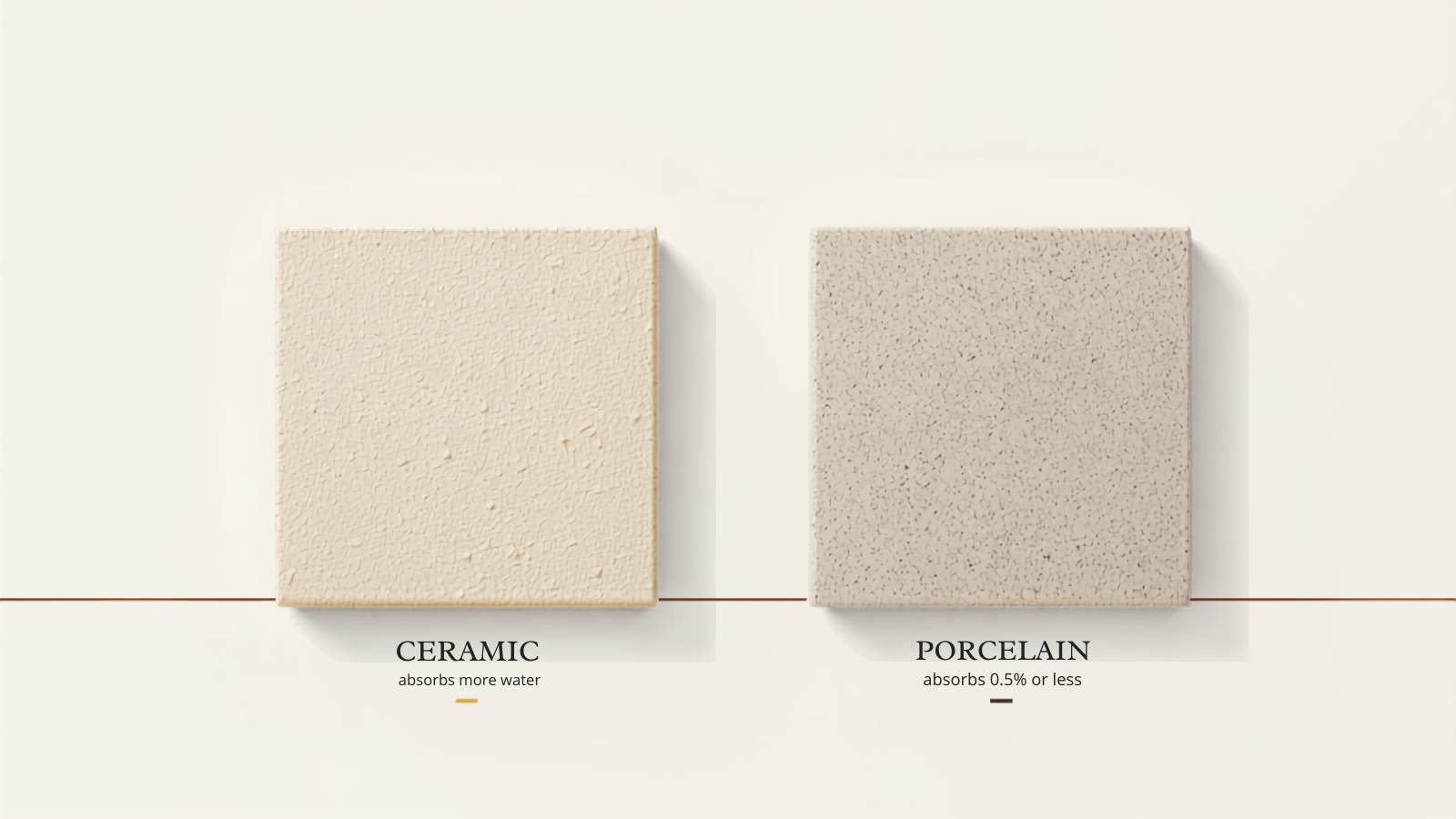
Two tiles sit next to each other in the showroom. Same size, same finish, nearly the same look. One is labeled ceramic, one porcelain, and the porcelain costs noticeably more per square foot.
The difference is real, it is measurable, and it matters in some rooms far more than others. Knowing which rooms lets you spend the money where it counts and save it where it does not.
What Actually Separates Porcelain From Ceramic
Both start as clay. Both get pressed into shape and fired in a kiln. Porcelain uses a finer, denser clay body and gets fired hotter, for longer.
That produces one measurable difference that defines the whole category. Porcelain absorbs 0.5% or less of its weight in water. Ceramic absorbs more. That threshold is the industry definition, not marketing language, and it is why porcelain behaves the way it does.
Less water absorption means the tile is denser all the way through. That density is what you are paying for: a harder, heavier tile that resists chipping and shrugs off moisture and freezing. It also cuts harder, which shows up in your installation labor.
Ceramic is softer and lighter. It cuts more easily, weighs less on a wall, and costs less. In the right room, none of that is a compromise.
The PEI Number on the Box
Look for a small number from 1 to 5 on the tile spec sheet. That is the PEI rating, and it describes how well the glazed surface resists abrasion from foot traffic.
PEI 1 is for walls only. Do not put it on a floor.
PEI 2 handles light traffic, typically a bathroom floor where people walk barefoot or in socks.
PEI 3 covers most residential floors, including kitchens and living areas.
PEI 4 handles heavy residential and light commercial traffic. This is the sensible choice for an entryway, a mudroom, or a busy kitchen where grit gets tracked in.
PEI 5 is built for commercial abuse and is more than a house needs.
Avoid putting a beautiful PEI 2 tile in a front entry. The glaze dulls along the traffic path within a couple of years, and you cannot clean that line off, because the surface itself has changed.
The Slip Number That Matters in a Bathroom
This is the specification most worth asking about and the one least often mentioned.
DCOF measures how much grip a tile surface offers when it is wet. The industry standard calls for a DCOF of 0.42 or higher for level interior floors that will be walked on while wet. Bathrooms, entryways, laundry rooms, and kitchens all qualify.
A polished tile can look spectacular and fall well below that number. In a bathroom, that is a genuine safety issue, and it matters more with every year you plan to stay in the house. Our guide to flooring for aging in place goes deeper on this.
Ask for the DCOF figure on any tile going into a wet room. A reputable manufacturer publishes it, and any showroom that sells tile properly can look it up for you.
Smaller tiles help too. More grout lines mean more texture underfoot, which is why mosaic tile is the traditional choice for a shower floor.
Glazed vs. Through-Body Porcelain
Porcelain comes in two constructions, and the difference shows up the day something gets dropped.
Glazed porcelain
The color and pattern are printed on the surface under a protective glaze. Modern printing is extraordinary, and the wood and stone looks will fool most visitors. Chip it hard enough and you see the pale body underneath.
Through-body porcelain
The color runs all the way through the tile, so a chip exposes the same color and damage is far less visible. You pay more and the pattern range is narrower. In a mudroom or a busy entry, it is worth the trade.
Where Ceramic Is the Smarter Buy
Spending up on porcelain everywhere wastes money. Ceramic is the better value in several places.
Walls and backsplashes. Nothing walks on a backsplash. Ceramic is lighter, easier for your installer to handle, cheaper, and available in the widest range of decorative shapes and colors. A kitchen backsplash is the clearest case for ceramic there is.
Shower walls. Same reasoning. The waterproofing behind the tile does the real work, and ceramic performs perfectly well on a vertical surface.
Guest bathroom floors. A bathroom used a few times a month does not need PEI 4 porcelain. A quality ceramic at PEI 3 with an adequate DCOF is plenty.
Decorative accents. Handmade-look ceramic, zellige, and specialty shapes bring character that mass-produced porcelain rarely matches. Our glass tile options are worth a look for accent work too.
Where Porcelain Earns Its Cost
Entryways and mudrooms. Grit, water, and heavy shoes. Porcelain in PEI 4 with a decent slip rating handles all three.
Kitchen floors. Dropped pans, standing water at the sink, and constant traffic. The extra density earns its money here.
Primary bathrooms and shower floors. Constant moisture is exactly what the low absorption number is for.
Laundry rooms. A washing machine that overflows is a bad day either way. Porcelain will not be the part of the room that suffers.
Anywhere on a concrete slab where moisture is a factor. Tile set in cement-based mortar is comfortable with moisture in a way most other flooring is not.
Covered porches and outdoor spaces. Water that gets into a tile and freezes will crack it. Porcelain barely absorbs any, so it survives our occasional hard freezes.
You can compare finishes and formats in our tile collection, or read the background on construction and care on our tile flooring information page.
What Installation Adds to the Price
Tile is one of the few floors where labor can cost you more than the material, and the tile you pick changes the labor.
Porcelain is harder to cut and wears through blades faster. Large-format tile, anything over about 15 inches on a side, needs a flatter subfloor than smaller tile does, so leveling work often gets added. Patterns like herringbone create far more cuts than a straight lay. Natural stone needs sealing that porcelain does not.
Ask for the material and labor separately on your quote. It makes the tradeoffs visible and lets you decide where the money goes. Our flooring services page covers what the installation includes.
Grout Lines and Rectified Tile
Grout lines affect the finished look more than most people expect, and the tile decides how thin they can be.
Rectified tile has been cut to precise dimensions after firing, so every piece is exactly the same size. That allows very narrow grout lines and a nearly continuous surface, which is how those seamless large-format floors are achieved.
Non-rectified tile varies slightly piece to piece and needs a wider grout line to absorb the difference. Nothing is wrong with that, and a wider line suits some styles, but it is not the look to expect if you were picturing thin joints.
Grout color changes everything visually. Matching the tile makes a floor read as one surface. Contrasting emphasizes the pattern and every individual tile. Darker grout is more forgiving in kitchens and entries, where light grout shows traffic quickly.
Making the Call for Your Murfreesboro or Nolensville Home
Walk your house room by room and ask two questions in each: how much traffic crosses this floor, and does it get wet?
Heavy traffic or regular water points to porcelain, PEI 4 for the busiest floors, and a DCOF of 0.42 or above anywhere you will walk on it wet. Light traffic, dry conditions, or a vertical surface points to ceramic and lets you spend the savings on a tile you love looking at.
If a bathroom or kitchen remodel is what prompted this, our article on planning flooring for kitchen and bath remodels covers the sequencing questions worth settling early.
Faith and Grace Flooring installs tile throughout Murfreesboro, Nolensville, and the surrounding Rutherford and Williamson County communities. Come see full-size pieces at 902 Dashiel St in Murfreesboro or 7305 Nolensville Rd in Nolensville. You can also look through finished projects in our gallery or read our customer reviews.
When you are ready for numbers on your rooms, book a free flooring estimate and we will measure and quote the material and labor separately.