

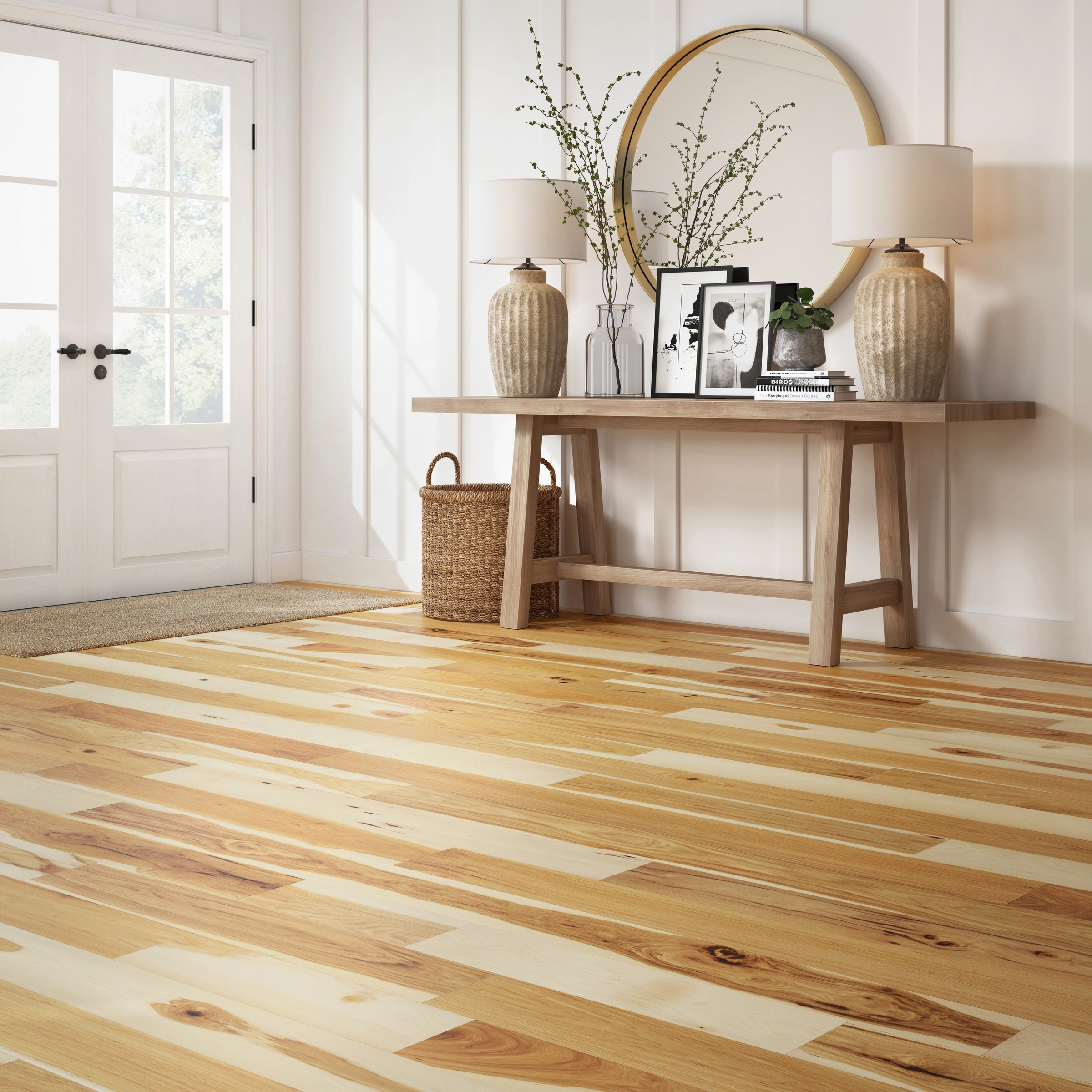
You have picked the species. You have picked the color. Then your installer asks whether you want it prefinished or finished in place, and the conversation turns into words nobody explained.
The choice changes how your floor looks up close, how long your house is unusable, how the finish wears, and how easy repairs are in ten years. It is worth understanding before you sign anything.
The Short Answer
Prefinished hardwood arrives with the stain and finish already applied at the factory. It goes down and you walk on it the same day. The finish is harder than anything that can be applied in your home, and there is no dust and no drying time.
Site-finished hardwood arrives raw. It is installed, then sanded and finished in place. That gives you a completely smooth surface with no grooves between boards, any color you want, and the ability to blend into hardwood you already have. The cost is dust, fumes, and several days of staying off your own floor.
Neither is better. They fail in different places.
What the Two Words Actually Mean
Prefinished boards are sanded, stained and coated on a factory line, then boxed. The coating is cured with ultraviolet light rather than air, which lets manufacturers build up several hard layers in minutes instead of days.
Most prefinished finishes carry aluminum oxide mixed into the coating. That is the same abrasive used on sandpaper, suspended in the finish. It is why a factory finish resists scuffing far better than anything a finisher can brush on in your living room. Finish warranties measured in decades are common.
Site-finished floors are the older method. Raw boards are nailed or glued down, sanded flat as one surface, stained if you want color, then coated with polyurethane in your house.
Both are real hardwood. Both are available in solid and engineered construction, which is a separate decision covered in our guide to engineered versus solid hardwood.
The Edge Detail Nobody Points Out in the Showroom
Kneel down and look along a prefinished floor at eye level. You will see a small groove where every board meets the next one.
That is a micro-bevel, a tiny chamfer machined into each board edge. It exists because factory boards cannot be sanded flat after installation, so a small bevel hides any height difference between neighboring boards. Without it, one board sitting a hair proud of the next would catch the light and your bare foot.
The bevel is not a flaw. It is a deliberate design choice, and plenty of people like the way it defines each plank. But it does two things worth knowing about. It collects dust and grit along every seam, so you notice it when you clean. And it makes the floor read as a collection of boards rather than one continuous wooden plane.
A site-finished floor has no bevels at all. It is sanded as one surface, so the boards disappear into each other and the floor reads as a single sheet of wood. If that smooth, seamless look is what you have pictured in your head, this is the only way to get it.
Go look at both in person before deciding. It is the difference most people care about once they see it, and no photograph shows it properly.
What Actually Happens in Your House
This is where the two options separate most sharply, and it decides the choice for a lot of families.
Prefinished
The crew installs the floor and leaves. There is sawdust from cutting boards, which is ordinary construction mess, and then you are done. You can put furniture back and walk on it the same day. No fumes, no waiting, no living somewhere else.
Site-finished
Installation, then sanding, then staining, then two or three coats of finish with drying time between each. Expect several days from start to walkable, and longer before the job is truly finished.
Sanding produces very fine dust that finds its way into everything. Modern dustless sanding systems capture a great deal of it, and they are worth paying for, though no system removes all of it.
Then there is the wait. Finish dries long before it cures. You can usually walk on it in socks after a day or so, and move furniture back after a few days. Area rugs typically have to stay off for several weeks while the finish hardens all the way through. Putting a rug down early traps solvent underneath and can leave a permanent mark. Ask your finisher for their exact schedule, because it varies by product.
Which Finish Lasts Longer
On hardness, factory finishes win, and it is not close. The aluminum oxide layer is significantly tougher than site-applied polyurethane, which is why prefinished floors hold up so well under dogs, chairs and children.
Site-applied finish is softer and will generally show wear sooner in the traffic lanes.
There is a counterweight, though, and it matters. A site-finished floor is far easier to refresh. The finish is softer and there are no bevels holding grit. That lets a worn site-finished floor be lightly abraded and given one fresh coat, which takes a day and costs a fraction of a full sanding.
Doing the same to a prefinished floor is harder. The factory finish is difficult to abrade properly, the bevels trap debris that interferes with adhesion, and manufacturers often will not warrant the result.
So the honest comparison is this: prefinished stays looking good for longer without attention, and site-finished is cheaper and simpler to bring back once it does wear.
Color, Matching, and Middle Tennessee Homes
Prefinished gives you whatever the manufacturer makes. That is a large range and it includes finishes that are difficult to reproduce on site, including many hand-scraped and wire-brushed textures. What you see in the sample is what arrives.
Site-finished gives you any color that exists, mixed to whatever you want, and any sheen from flat to gloss. If you have a specific tone in mind that nothing in the showroom quite hits, this is how you get it.
Where site-finishing becomes genuinely hard to beat is matching hardwood you already have.
Plenty of older homes around Murfreesboro and Nolensville have hardwood in part of the house and something else in the rest. Say you extend that floor into a new room, or open a wall between two spaces. A site-finished job lets the new wood be sanded and stained together with the old until the join disappears. Prefinished boards will always read as a different floor sitting beside your existing one, no matter how close the color is.
The same logic applies to sheen. Getting a new floor to sit comfortably beside existing woodwork is a real problem, and our guide to matching new floors to existing trim, doors and cabinets goes further into it.
What Each One Means for Repairs Later
Something will eventually get dropped, dragged or flooded. How your floor was finished changes what happens next.
Prefinished damage is usually repaired by replacing the board. Because every board is identical and factory-made, a replacement from the same product line drops in and looks right. Keep a spare box from the original order; production runs shift over time and an exact match years later is not guaranteed.
Site-finished damage is usually repaired by sanding. A damaged area can be sanded back and refinished into the surrounding floor, which is one of the real advantages of not having bevels. There is no seam for the repair to hide behind, so the work has to be done well, but when it is, it vanishes.
Either way, understanding what your flooring warranty actually covers before there is a problem saves an unpleasant conversation later.
Which One Suits Your Situation
Choose prefinished when you need the house usable quickly, or when someone in the household reacts badly to dust and fumes. It also suits a busy family space, and any situation where you have already found a color and texture you love.
Choose site-finished when you want a completely smooth floor with no grooves, or when you are matching hardwood you already have. It is also the answer when you want a color nothing in the showroom delivers, or when you are refinishing existing floors anyway.
One more consideration for older homes. If your subfloor is uneven, a site-finished job sands the whole floor flat as one surface and hides a lot. Prefinished boards follow whatever they are laid over. That is worth raising during the estimate, and it is on our pre-installation checklist.
You can browse both kinds of hardwood in our hardwood collection, or read the background on construction and care on our hardwood flooring information page.
Frequently Asked Questions
Is prefinished hardwood cheaper than site-finished?
The material often costs more, and the labor usually costs less because sanding and finishing are removed from the job. Which one lands cheaper overall depends on the product and the size of the floor. Ask for material and labor separately on your quote so the comparison is visible.
Can you sand a prefinished floor later?
Yes, if the wood beneath is thick enough. Sanding removes the factory finish and the bevels along with it, leaving a smooth floor that then has to be finished on site. It works, and it is sometimes the right answer for an old prefinished floor, but you are paying to remove something you paid for originally.
Which one is better with dogs?
The factory finish resists scratching better, so prefinished has the advantage. Species hardness matters at least as much though, and so does keeping nails trimmed. Our guide to kid and pet friendly hardwood covers the whole picture.
Do the micro-bevels collect dirt?
They collect dust and grit, yes, and you will notice it when you vacuum. It is a maintenance annoyance rather than a durability problem. A vacuum with a hard-floor setting handles it; a broom tends to push debris along the grooves.
How long before I can put my rugs back down?
On a site-finished floor, typically several weeks, not several days. The finish needs to harden all the way through before anything traps it. Your finisher will give you a specific date, and it is worth respecting even though the floor feels dry long before then.
Does our humidity affect the choice?
The finishing decision itself, no. Humidity affects the wood underneath either way. Boards need time to settle to the conditions in your house before installation, and seasonal movement is normal here. Our article on hardwood species and finishes for our hot, humid climate covers what that means for species selection.
Making the Decision
Ask yourself three things. How smooth do you want the floor to look up close? How much disruption can your household absorb? And are you matching hardwood that already exists in the house?
If you want seamless, can live with the mess, or need to match, finish it on site. If you want the house back tonight and the hardest finish available, buy it prefinished.
Faith and Grace Flooring installs both across Murfreesboro, Nolensville, and the surrounding Rutherford and Williamson County communities, and we also handle hardwood refinishing on floors you already have. Come see the edge difference for yourself at 902 Dashiel St in Murfreesboro or 7305 Nolensville Rd in Nolensville. You can also read our customer reviews or ask about financing while you are there.
If you’re ready to price both options for your rooms, you can book a visit or an in-home measurement through our free flooring estimate.