

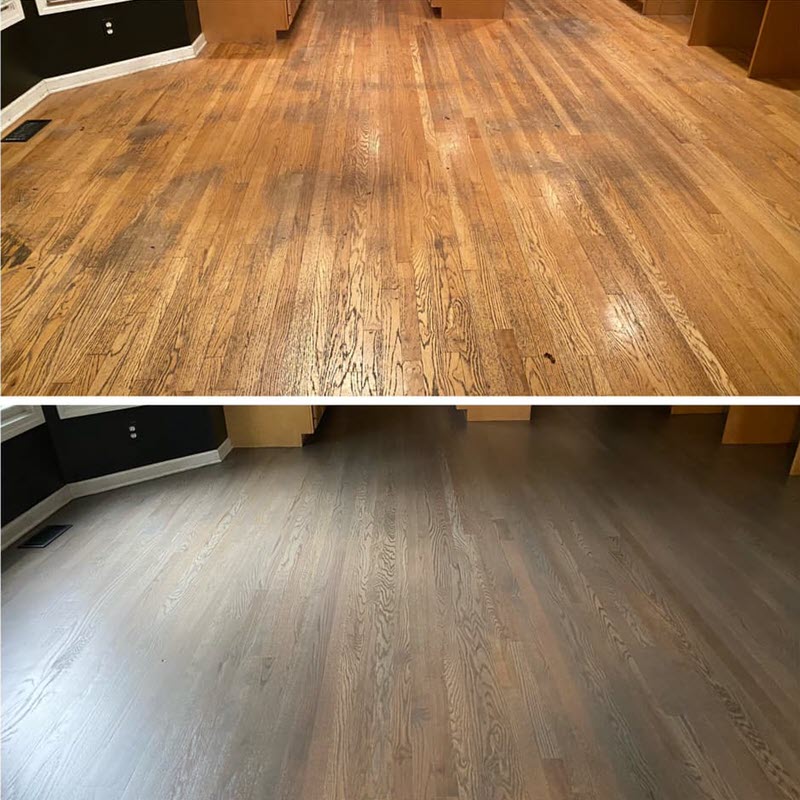
Walk into many older homes in this area and you’ll see the same thing: hardwood that has great bones but looks tired. Scratches from kids and pets, sun-faded spots by the windows, dull traffic paths down the hallway. When you reach that point, the real question isn’t “Do I need to do something?” It’s “Do I refinish what I have, or start over with new flooring?”
Both choices can be smart; it just depends on what’s happening under the surface and what you want the space to feel like long term.
When Refinishing Makes the Most Sense
If the boards are still structurally sound—no major cupping, rot, or movement—refinishing is often the best value. Sanding and new finish can erase decades of wear and let you change the color dramatically, from orange-toned oak to a cooler brown or even a modern natural look.
A professional crew can repair small gaps, replace a few damaged boards, and then blend everything together. With the right stains and finishes, hardwood refinishing can completely reset the room without the cost and disruption of a full tear-out. It’s especially powerful if you’re preparing to sell and want to boost value while keeping the character buyers love in older houses.
There are limits, though. Solid wood can only be sanded so many times. If your floors have already been refinished multiple rounds, or if there’s heavy water damage, you may be pushing the material beyond what it can handle safely.
Clear Signs It’s Time to Replace Instead
Some problems are deeper than a sander can fix. Wide gaps between boards, soft spots, or planks that move underfoot often point to subfloor issues or moisture damage. In those cases, putting more finish on top is like repainting a cracked wall—you’re hiding, not solving, the problem.
Replacement also makes sense when you want to change the layout or upgrade performance. Maybe you have hardwood in the living room but old tile in the kitchen and you’d like one continuous surface. Starting fresh with a modern hardwood flooring collection lets you choose board width, sheen level, and durability that fit how your household really lives.
Homes that deal with heavy pets, frequent entertaining, or lots of sunlight might be better served by newer engineered or performance wood products rather than pushing an aging floor through another sanding.
Where Laminate Enters the Conversation
Sometimes the smartest move isn’t new hardwood at all. If you love the wood look but want something tougher on the budget and more forgiving with moisture, laminate can be a strong alternative.
Modern options have convincing textures, wide planks, and finishes that stand up well to active families. In areas where the original wood is beyond saving—or where you never had wood to begin with—exploring laminate flooring options can give you the style you want without the same maintenance demands. This is especially useful in basements, bonus rooms, or secondary spaces where full hardwood replacement might not pencil out.
How to Decide What’s Right for Your Home
The choice usually comes down to three questions: What shape is the existing floor in? How long do you plan to stay? And how much disruption can you tolerate right now?
Refinishing preserves original character and often costs less, while replacement opens the door to new layouts, updated materials, and better performance. A walk-through with an experienced installer can reveal issues that aren’t obvious at first glance, and photos of similar projects in their before-and-after gallery can help you visualize what’s possible in a home like yours.
If you’re unsure where your floors fall on the refinish-or-replace spectrum, it helps to get eyes on the project. You can schedule a visit through their free estimate request and get straightforward guidance tailored to your rooms, your timeline, and your budget.