

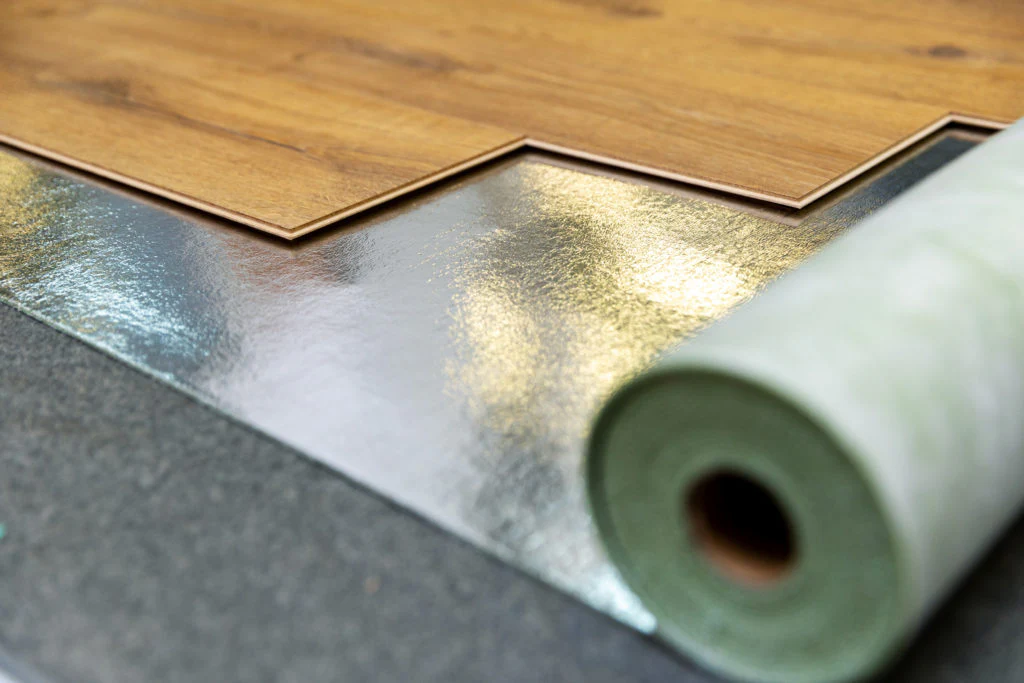
You've picked out the perfect flooring. The color, the texture, the way it'll transform your living room — you can already picture it. But there's a hidden layer beneath those beautiful planks that determines whether your new floor feels solid underfoot or sounds hollow with every step. That layer is underlayment, and skipping the right one is like building a house on a shaky foundation.
What Underlayment Actually Does
Underlayment sits between your subfloor and the finished flooring above it, and it earns its keep in four distinct ways. Sound reduction is the most noticeable — without proper cushioning, every footstep echoes through the room and into the one below it. Moisture protection matters deeply in Middle Tennessee, where humid summers can push ground moisture up through concrete slabs and threaten your flooring if nothing stands in the way. A quality pad also smooths out minor subfloor imperfections so your finished floor doesn't develop squeaks or soft spots over time. And it provides thermal insulation, keeping floors warmer in winter and contributing to a more comfortable home year-round.
Why Laminate Flooring Depends on It
If you're considering laminate, underlayment isn't optional — it's essential. Laminate planks are engineered as a floating floor, meaning they lock together and rest on top of the subfloor without being nailed or glued down. That floating design puts all the responsibility for stability and sound control on the layer underneath. The right underlayment prevents that hollow, plasticky sound people sometimes associate with laminate and instead gives it the solid, quiet feel of a much more expensive floor. When you're looking through the styles and finishes in our laminate selection, know that what goes underneath those planks matters just as much as what you see on top. For a deeper understanding of how these materials perform in real homes, we've put together laminate flooring guidance that covers everything from installation to long-term care.
What About Hardwood?
Hardwood brings its own considerations. Solid hardwood gets nailed directly to the subfloor, so underlayment plays a different role here — primarily moisture control and sound dampening rather than structural support. Engineered hardwood, however, can be floated like laminate, which means it benefits from a similar underlayment approach. This is one of the reasons that browsing our hardwood options with an understanding of your subfloor situation leads to a much better outcome. A knowledgeable installer will assess whether your existing subfloor needs a moisture barrier, a sound-reducing pad, or both before anything gets laid down.
Choosing the Right Layer
Not all underlayment is created equal. Standard foam works for budget projects but offers minimal sound and moisture protection. Cork provides excellent sound absorption and natural thermal properties, making it a favorite for second-story installations. Combination products with an attached vapor barrier are ideal for concrete slabs — a common scenario in newer homes around Rutherford County. The thickness matters too: too thin and you lose performance, too thick and you risk the flooring flexing at the seams. This is where working with a team that understands local conditions makes all the difference.
The layer you never see is the one that determines how much you'll enjoy your floor for the next twenty years. Whether you're leaning toward laminate, hardwood, or still weighing the options, getting the foundation right from the start saves you from disappointment down the road. Ready to talk through what your project needs? Schedule a free estimate and we'll walk through every detail together.